
Hello, Lea County!
Lea County Data Center
Google is in the very early stages of reviewing this opportunity and evaluating options to determine if Lea County is the right fit for a long-term partnership with the community. We recognize that there is a lot of speculation out there. We've built this page to be the source of truth for facts and updates as we move forward together. We will continue to update this website as the project progresses.
Our Cooling & Water Approach
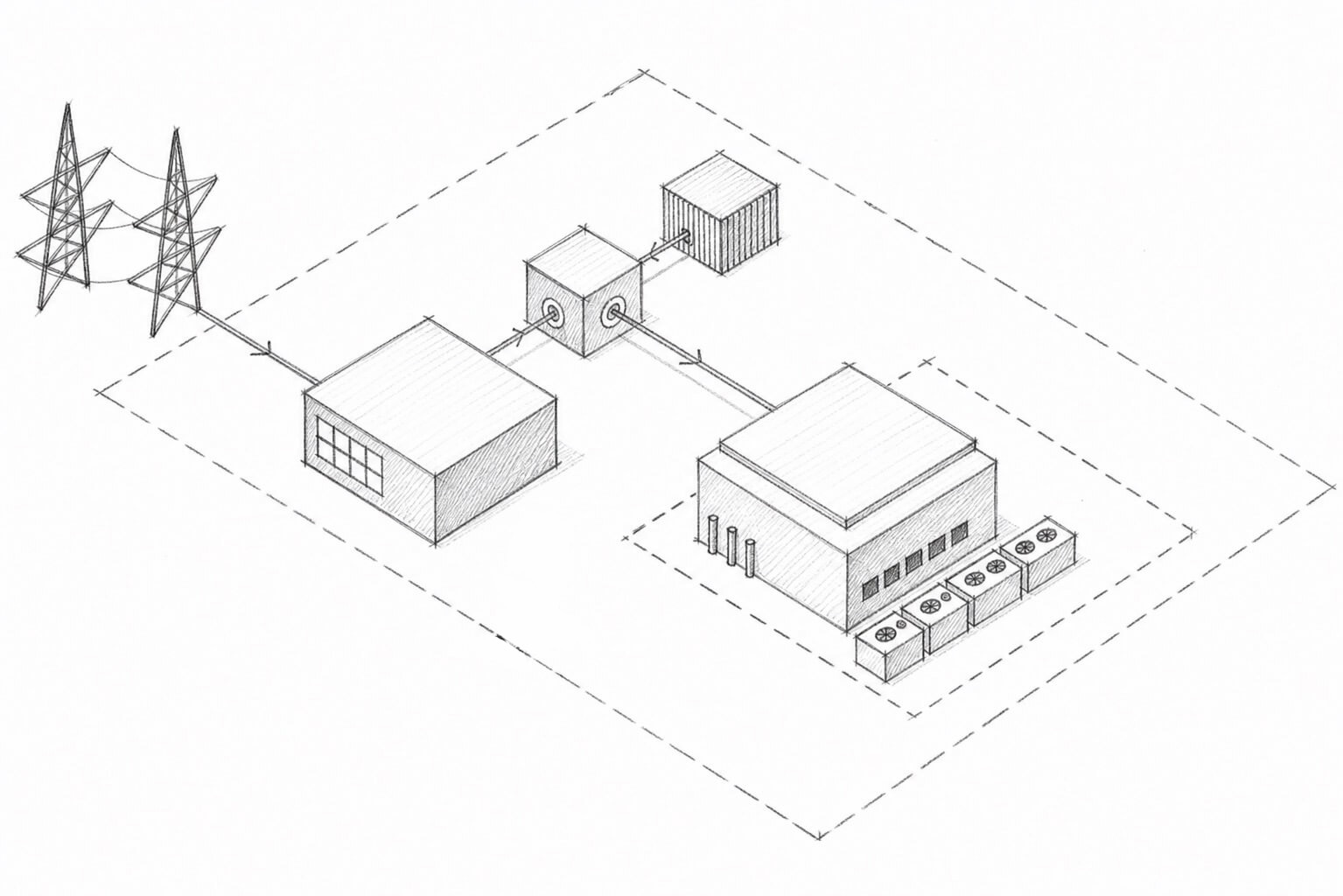
Our prospective facility in Lea County would be a closed loop, air-cooled facility to minimize impacts on local watersheds. This means it will not use evaporative cooling and water consumption will be limited to domestic uses like bathrooms and kitchens, with water consumption similar to an office building.
- For reference, a comparable Google air-cooled data center consumed 9.7 million gallons of water in 2025, per our latest Environmental Report. That's roughly equivalent to the amount of water needed for 71 homes.
Construction water
This phase of the proposed project will have the highest utilization rate for water. We are working closely with local authorities to ensure that usage is both sustainable and responsible. We anticipate daily average water use to be just over 900,000 gallons of water per day, with a peak average of roughly 1 million gallons per day for roughly 4 months.
- For reference, 900,000 gallons of water is roughly equivalent to 1.36 Olympic-sized swimming pools.
To complete the initial flush and fill of the closed-loop system – Google expects we will need between 9.5 and 9.7 million gallons of water to commission the closed-loop system across our site. After this process is complete, daily water consumption will be limited to domestic uses.
- For reference, 9.7 million gallons is roughly equivalent to 15 Olympic-sized swimming pools.
To compare our expected water usage with other local industries in Lea County – per the Hobbs News-Sun:
- Irrigated agriculture uses 70.6 billion gallons of water per year (or ~193.3 million gallons per day)
- Power generation uses 9.21 billion gallons of water per year (or ~25.2 million gallons per day)
- Mining and oilfields require 5.58 billion gallons of water per year (or 15.28 million gallons per day)
Our Energy Approach
Google's energy plans are still being finalized, but our power mix is likely to be a mix of intermittent clean energy resources like solar and wind, energy storage technologies like batteries, and a moderate amount of firming, gas-powered resources to balance the system. This approach is informed by our moonshot to match our electricity demand with new clean power every hour of every day, or 24/7 carbon-free energy (CFE). As such, the project will be designed, in coordination with Southwest Public Service Company (SPS), to meet the requirements of New Mexico's Energy Transition Act and Renewable Energy Act.
Google's responsible energy growth approach is grounded in a commitment to pay for 100% of the power we use. When we build data centers, we also cover the infrastructure needs directly driven by our growth. We will not pass on the costs of our growth to families, and our footprint will not require the adoption of additional electricity conservation measures from the community.
Any project developed by Google will also comply with all applicable local requirements, including environmental and public health regulations, to ensure local communities are not adversely impacted by our project.
Economic Impact
Being a good neighbor means investing in the things that matter most – local jobs, schools, nonprofits, and the responsible stewardship of shared resources. At Google, we are an active member in every new data center community we join.
This means creating local, long-term, good-paying jobs; investing in skills training programs to ensure community members build careers alongside our data centers; and supporting local infrastructure that directly benefits residents, like schools and hospitals.
We expect the prospective Lea County data center will produce hundreds of long-term, operational jobs initially, as well as thousands of jobs during construction. Google also is communicating with Lea County officials regarding a potential economic development arrangement that will provide millions of dollars for the benefit of local schools, hospital facilities, and local governments and will improve the availability of local, long-term affordable housing. Any arrangement will ensure that Google makes payments that exceed 100% of its real property taxes.
Noise
The prospective site is located roughly five miles outside the western edge of Hobbs. In addition to our noise mitigation measures and equipment, this location was intentionally chosen to insulate community members from any noise issues, including during construction.
What is a data center?
Data centers are the engines of the internet. They power all the things we do online every day like browsing websites, watching videos and sending emails. From the outside, a data center looks similar to a modern warehouse; from the inside, it houses the "engine room" of the internet-thousands of powerful computers called servers that store and process almost everything we do online.
Why Do Data Centers Matter?
Data centers are the backbone of our digital world, supporting the essential services we rely on every day, for example:
Advancing Health Care
Data centers power the electronic health records used by 78% of office-based physicians. Today, this technology also supports AI innovation that helps doctors accelerate cancer detection and assist in life-saving scientific discovery.
Supporting Small Business
They make it possible for local businesses to process online payments and reach customers through the cloud. In fact, 75% of small businesses say that limited access to technology would harm their operations.
Keeping Institutions Running
These facilities power local 911 systems, electronic banking, and remote work platforms. They even help local governments streamline services for citizens and track natural disasters like floods and wildfires to keep communities.
How This Helps Lea County and New Mexico Grow
We want to be a neighbor that listens and gives back. Because data centers are major investments, Google's investments provide a large amount of state and local tax revenue into the communities we call home. This tax revenue often goes directly to funding local schools, fire departments, and parks—all while requiring very few city services in return. You can learn more about our approach and our plans for Lea County in our Economic Impact overview.
Responsible Development
At Google, we focus on responsible development. Our projects are not "cookie-cutter" facilities; we evaluate each site individually to optimize for business needs, the environment, and the local community. These sites represent a significant economic investment in Lea County creating thousands of construction jobs, hundreds of full-time operational roles, and improvements to local infrastructure. Beyond the facilities themselves, Google plans to partner with local organizations to expand access to skilled trades training, technology education, and no-cost Google Career Certificate programs, while also supporting other critical needs and local priorities.
Getting the Facts Right
We know you have questions about how a project like this might affect your daily life. Below you will find answers to some common questions. We also welcome you to share additional questions via the inquiry form below.
Google will secretly use more water than advertised, worsening drought conditions and decreasing the availability of water for residents and ranchers.
We are committed to responsible water stewardship. In consultation with local experts, we find the best cooling solution for each site, which is exactly why we've chosen an air-cooled system in Lea County. We also publish our water usage for every data center in our annual Environmental Report, and are committed to replenishing more water back into communities than we use in our data centers.
Will the data center cause energy bills to increase for local residents or cause blackouts during periods of peak demand?
No. Google pays for 100% of the electricity and related infrastructure used to power its data centers. When built responsibly, data centers can provide long-term, reliable electric demand, helping increase utility revenue needed to support new energy infrastructure investments in a way that benefits all customers. We know rising energy costs are affecting U.S. families and businesses, and we are committed to keeping power affordable and accessible for residents and businesses. A core part of Google's responsible growth strategy is making sure data center expansion does not place additional burdens on local communities.
Data centers create few jobs while demanding large tax breaks and contributing little to the local economy.
Data centers can deliver significant, long-term economic benefits beyond the number of permanent jobs on site. These projects support construction and skilled-trade jobs, create ongoing opportunities for local contractors and service providers, expand the local tax base, and can generate substantial new revenue for schools, public safety, infrastructure, and other community priorities. Data centers represent major long-term investments that can bring new economic activity and revenue to a community for decades.
The data center will produce deafening jet-engine noise and low-frequency humming 24/7.
We use high-tech, low-noise equipment, sound walls, and building setbacks to ensure we meet or exceed all local noise ordinances. Every project includes an expert acoustical study to model and minimize any impact on the surrounding area.